Brand Identity
Fix your Brand, Before You Fix Your Marketing
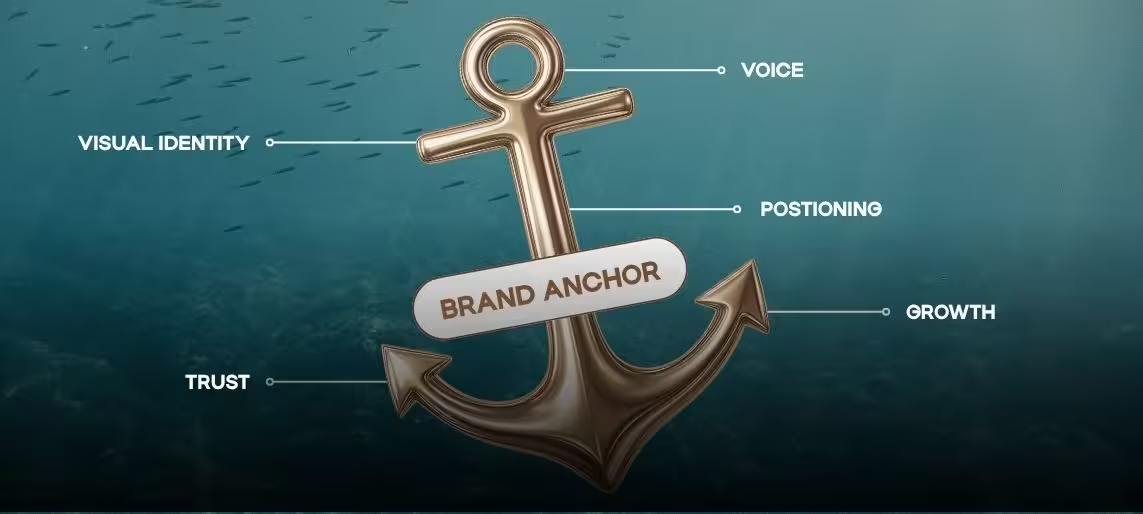
Most companies don’t struggle with marketing because they lack effort, they struggle because they lack clarity.
I’ve worked with founders and been on marketing teams who are publishing content consistently, running ads, redesigning websites, launching campaigns, they’re doing all the right things and yet, everything feels fragmented. The messaging shifts, the visuals evolve every quarter, and the tone changes depending on who’s writing the post.
When that happens, marketing becomes exhausting. The real issue usually isn’t creativity nor is it the budget. It’s that brand identity was treated as a visual project instead of a strategic foundation.
When brand identity is reduced to a logo and a color palette, marketing becomes guesswork. Time is money and no one has time to guess whether it’s helping or hurting. When brand identity is built as a system, marketing starts to compound.
A strong brand identity will make things look consistent, but it makes decisions easier. At its best, brand identity answers questions before they become meetings and I know some of those meetings could easily be an e-mail.
Brand identity clarifies the following:
Without that framework, teams end up debating the same things repeatedly:
None of those are design problems rather they’re brand clarity problems.
When identity is clearly defined, creative choices become directional instead of subjective. Teams move faster because they’re operating from shared principles, not personal taste. That’s the difference between branding as decoration and branding as infrastructure.
Modern marketing is multi-channel by default. Social media, email, paid ads, organic search, website, partnerships, events, and video to name a few.
The platforms will continue to evolve, the algorithms will change, and new tools will emerge. Do you know what shouldn’t change every quarter? Your identity.
A strong brand system allows marketing to scale across channels without losing coherence. It ensures that whether someone encounters you on LinkedIn, your homepage, or a podcast appearance, it should feel connected.
Consistency does three important things:
Marketing should feel familiar before it feels clever. Don’t focus on campaign-driven thinking, because every initiative starts from scratch. Build a brand-led system, then a campaign can be plugged into the existing structure.
Weak brand identity doesn’t just create aesthetic inconsistency, but it slows growth in ways that are harder to measure yet deeply felt. Allow me to clarify.
This is what I see repeatedly:
Slower internal decision-making.
When identity isn’t defined, everything becomes a debate. Creative energy gets spent on alignment instead of execution.
Higher long-term creative costs.
If you’re redesigning your look every 18–24 months, you’re not evolving. You’re resetting. That reset comes with lost equity and additional expense. That’s not cost-effective.
Inconsistent customer perception.
If your tone is playful on Instagram, corporate on your website, and aggressive in ads, customers don’t know which version is real.
Trend chasing comes and goes.
Without a clear brand anchor, businesses often lean into whatever format or aesthetic is currently performing. The result may generate short-term engagement like participating in some social media movement, but it rarely builds long-term recognition. Does anyone reminiscence about a particular brand with their version of the Harlem Shake?
If you’re a smaller business, DIY branding can feel efficient at the start. A quick logo, a nice looking template, and a few colors, but when marketing begins to scale, those shortcuts become friction points. Remember, Folks, you can’t trademark an A.I. generated logo.
Brand identity isn’t about making things look polished, but making growth sustainable.
The most effective brands treat identity as an operational asset.
That means brand identity should:
When identity is set up properly, it becomes a filter.
As companies grow, complexity increases. More people are involved, more content is produced, and more touchpoints are created. The faster marketing moves, the more important the foundation becomes.
Brand identity plays a critical role in how customers perceive you over time and perception is not formed in a single campaign. It’s formed through repetition. Rinse and repeat.
If every touchpoint reinforces the same positioning, voice, and visual language, your brand becomes recognizable. When recognition becomes familiarity and familiarity becomes trust, conversion friction decreases.
Businesses that invest in strategic brand identity early tend to spend less time reinventing themselves. They can launch campaigns more efficiently and create marketing assets that compound. Brand identity is what allows marketing to mature.
Marketing tactics matter as well as the execution, but without a clear brand identity, those efforts will remain disconnected.
Brand identity isn’t decoration, it isn’t a phase before “real marketing” begins and it isn’t something to revisit only when performance drops. It is the operating system that marketing runs on.
When brand identity is clear, marketing stops feeling chaotic. The brand clarity will build into trust, recognition, and growth.
Joe Baron is a brand strategist and founder based in New York. He works at the intersection of brand identity, marketing systems, and visual strategy, helping growing companies build clarity and long-term brand equity.
Schedule a call with a marketing expert today to get started on your next phase of business.