SEO
What Are Conversational Queries in SEO and Why Do They Matter?
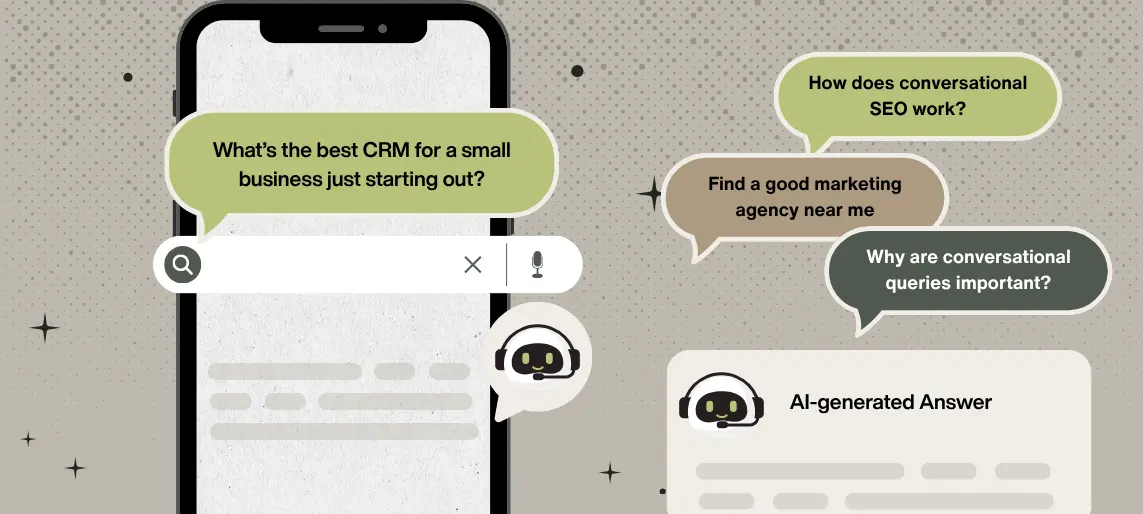
Search behavior has become much more conversational over the last few years. People no longer search with stiff, fragmented phrases like “SEO strategy 2024” or “best CRM software.” Instead, they ask questions that sound much closer to how they speak in everyday life.
Someone might search, “What CRM should a small business use if they’re just getting started?” or “How do conversational queries affect SEO?”
This shift is happening because search engines and AI tools are now designed to understand natural language. Google, voice assistants, and platforms like ChatGPT are all built to interpret questions and intent, not just keywords.
As a result, conversational queries SEO has become an important part of modern search strategy. To understand why, it helps to start with what conversational keywords actually are and how they fit into the broader SEO landscape.
Conversational keywords are search phrases that mirror the way people naturally ask questions.
Traditional SEO often focused on short keyword strings like “marketing agency Phoenix” or “CRM pricing.” Conversational keywords are typically longer and more detailed because they reflect how someone might speak to another person.
Examples include:
These queries include more context and intent than traditional keywords. They often contain full questions, location signals, or specific scenarios.
This is closely connected to how modern search systems function. Instead of matching exact words, search engines interpret meaning, context, and user intent. AI-powered search tools go even further by generating answers based on multiple sources.
If you want to understand how those systems interpret natural language questions, we explain the mechanics in more detail in our article How Does AI Search Work and Why Is It Changing SEO in 2026. In short, AI search engines analyze context, intent, and relationships between topics rather than simply matching individual keywords.
For SEO professionals, this means conversational queries are no longer a niche tactic. They reflect the way people actually search today.
This connects directly to how AI search engines interpret natural language, because modern search systems are designed to understand meaning, context, and intent rather than exact keyword matches alone.
Conversational phrasing refers to the natural language structure people use when asking questions online.
Instead of typing short phrases, users increasingly search with full sentences or detailed questions.
For example:
Older search style:
Conversational phrasing:
The difference is context. Conversational phrasing often includes the user’s situation, goals, or constraints.
This shift has been accelerated by several technologies. Voice assistants, mobile search, and AI-powered tools all encourage people to interact with search engines in a more natural way.
Because of this, content that answers questions directly tends to perform better. Search engines can easily identify and extract clear answers, especially when the information is structured logically.
In many cases, conversational phrasing also appears in AI-generated search results or featured snippets. When someone asks a question, search engines try to deliver a concise answer immediately.
For content creators, this means structuring content around real questions rather than isolated keywords.
Voice assistants have accelerated this behavior because voice search and AI assistants encourage people to ask questions the way they naturally speak.
Even though conversational queries are becoming more common, the fundamental keyword categories in SEO still apply. Most searches fall into one of four intent based groups.
Informational keywords appear when someone is trying to learn something.
Examples include:
These queries often take the form of questions and are strongly connected to conversational search.
Navigational Keywords
Navigational searches occur when someone wants to find a specific website or brand.
Examples include:
The user already knows the destination and simply uses search to reach it.
Commercial queries happen when someone is researching products or services before making a decision.
Examples include:
These searches indicate that the user is evaluating different options.
Transactional Keywords
Transactional keywords signal that someone is ready to take action.
Examples include:
Conversational queries often appear during informational and commercial searches because those stages involve exploring questions and evaluating solutions.
Keyword strategy still plays an important role in SEO, but it has evolved significantly with the rise of AI search. If you want a deeper look at how keywords function in modern search systems, we cover that topic in our article Do Keywords Still Matter in the Age of AI Search. The short answer is yes, but they now act as signals of intent rather than rigid phrases that must be repeated.
Conversational queries SEO works best when content is built around topics and questions rather than isolated keywords.
Instead of targeting a single phrase, effective content strategies focus on answering a cluster of related questions. For example, a brand writing about conversational search might create content that explains:
Together, these pieces create a topical ecosystem that demonstrates authority around the subject.
This approach also aligns with how AI powered search systems gather information. AI models often extract small sections of content that clearly answer a question. Pages that contain structured headings, concise explanations, and clear definitions are easier for these systems to interpret.
Conversational queries are also connected to a broader shift in how search visibility works today. People are no longer discovering information on a single platform. They search across Google, social media platforms, AI tools, and marketplaces.
We discuss this shift in more detail in our article What Is Search Everywhere Optimization and Why Does It Matter for Your Brand. In short, visibility today depends on showing up wherever your audience is asking questions, not just where traditional search engines rank pages.
Conversational queries naturally fit into this environment because they reflect real human language.
Conversational search does not mean keywords disappear. It means keywords now work more as intent signals than rigid phrases that need to be repeated throughout a page.
One simple framework that helps guide SEO strategy is the three C’s of SEO: content, credibility, and consistency.
These principles are discussed more fully in our article What Is Search Everywhere Optimization and Why Does It Matter for Your Brand, but a brief overview helps explain how they connect to conversational search.
Content refers to creating material that genuinely answers the questions your audience is asking. Conversational queries make those questions more visible because they mirror natural language.
Credibility refers to trust and authority. Search engines and AI tools prioritize sources that demonstrate expertise, accuracy, and reliability.
Consistency is the long term discipline of publishing valuable content around your core topics. Brands that consistently answer relevant questions build topical authority over time.
Conversational queries SEO fits naturally into this framework. By listening closely to how people phrase their questions and building content that answers them clearly, brands create content that is both helpful to readers and easy for search systems to understand.
In many ways, conversational search simply brings SEO back to its original purpose: understanding what people want to know and providing the best possible answer.
Schedule a call with a marketing expert today to get started on your next phase of business.